This post may contain affiliate links. If you make a purchase, I may make a commission at no cost to you. For more information, please read my full disclosure.
There’s a tab open on your phone right now. Maybe it’s a budgeting app you downloaded three weeks ago and never set up. Maybe it’s a brokerage account you got halfway through opening before closing it out. Maybe it’s an article about Roth IRAs you bookmarked for when you “feel ready to really read it.”
Sound familiar?
We’re all waiting for something. Waiting to feel confident enough. Informed enough. Stable enough. Ready enough. We tell ourselves we’ll start saving when there’s more money at the end of the month. We’ll start investing when we understand it better. We’ll get serious about our finances when life calms down a little.
But here’s the thing: that feeling of readiness you’re waiting for? It doesn’t come first. It never did. It comes after you start.
The doing is what makes you ready. And the sooner you stop waiting for the feeling to show up and just take one small action, the sooner everything starts to change.
The Myth We All Believe About Motivation
We’ve been sold a story about how motivation works. The story goes like this: first you feel inspired, then you take action, then you see results. Motivation leads, action follows.
It sounds logical. It feels true. And it’s almost completely backwards.
Think about the last time you actually felt motivated to do something hard before you started. Not the idea of doing it — actually felt ready, excited, and confident going in. For most of us, that feeling is rare. More often, motivation shows up somewhere in the middle, after we’ve already begun and started to see even the smallest sign of progress.
The real sequence looks more like this:
You take one small action — even a reluctant, imperfect one
Something small shifts — an account gets opened, a number gets tracked, a dollar gets saved
You feel a flicker of momentum
That momentum makes the next action easier
And the next. And the next.
Motivation isn’t the engine. It’s the exhaust. It comes out of the doing, not before it.
This isn’t just a mindset trick. Psychologist Peter Lewinsohn developed a concept called behavioral activation, originally used to treat depression, that established something powerful: action precedes motivation, not the other way around. When you engage in behavior first, the feelings of energy, interest, and motivation follow. You don’t wait to feel better to do things. You do things, and then you feel better. The same principle applies directly to your financial life.
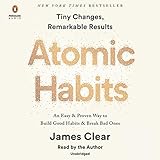
James Clear, author of Atomic Habits, puts it this way: every action you take is a vote for the kind of person you want to become. You don’t need to believe you’re “a person who invests” before you open an account. You open the account, and that single act is the first vote. The belief catches up to the behavior, not the other way around.
Newton figured out the physics version centuries ago: an object at rest stays at rest. You have to apply force first to get something moving. And once it’s moving, it wants to keep moving.
You are not the exception to this rule. Nobody is.
Why Moms Are Especially Good at Waiting
If you’re a mom, waiting probably feels very familiar. Not because you’re lazy or unmotivated. You are neither of those things. You’re managing a household, raising humans, and holding an extraordinary amount of invisible mental load every single day.
But that same over-responsibility that makes you so good at taking care of everyone else is exactly what keeps you at the back of the line when it comes to your own goals. Someone always needs something first. There’s always a more urgent fire to put out. Your “someday” list keeps growing and the somedays keep not arriving.
And layered on top of that is something else: the fear of doing it wrong. Moms research everything before committing. Car seats, pediatricians, schools, sleep training. That careful, thorough approach keeps your kids safe. But applied to your own financial life, it becomes a trap. You read one more article. Watch one more video. Wait until you fully understand before you take a single step.
The problem is that full understanding doesn’t come from research. It comes from doing.
You will not understand investing by reading about investing. You will understand it by opening an account, putting $50 in, watching what happens, and learning from that. The doing teaches you things no article ever could.
What Actually Happens When You Just Start
Here’s what the research and real life both show: a small action changes how you see yourself. And how you see yourself changes everything that comes after.
Think about what happens when a mama finally opens that savings account she’s been meaning to open for months. She puts in $25, not because she had a plan, not because she felt ready, but because she just did it. The next week, she checks the balance. It’s still $25, nothing magical. But something has shifted. She’s now someone who has a savings account. She starts thinking about what she could add to it. She starts noticing small places where money is leaking. She starts caring about something she didn’t care about before, not because she suddenly got motivated, but because the action created the stake.
The action didn’t follow the motivation. The motivation followed the action.
This is the pattern. Every time.
The Staircase Problem
One of the biggest reasons we don’t start is that we picture the entire staircase when what we actually need to do is just look at the first step.
Paying off $20,000 in debt feels impossible. Putting an extra $50 toward your highest-interest card this month is just a decision. Building a six-month emergency fund feels overwhelming. Opening a high-yield savings account and putting $10 in it today takes four minutes.
We talk ourselves out of starting because we’re measuring the distance to the finish line instead of the distance to the first step. And the first step is almost always embarrassingly small.
That’s the point. Small is not a compromise. Small is the strategy.
Stanford behavioral scientist BJ Fogg spent years studying exactly this. His research, detailed in his book Tiny Habits, found that small actions — not grand gestures or bursts of motivation — are what create lasting behavior change. More importantly, he found that the positive feeling you get after completing even a tiny action is what wires the habit in. The emotion is the reward. And the reward comes from the doing, not from the planning.
Because the first step doesn’t just move you forward financially. It does something more important: it proves to you that you move. That you act. That you are someone who does things. And that proof — that quiet, internal evidence — is exactly what creates the momentum that carries you up the rest of the staircase.
You don’t need to see the whole staircase. You just need to take one step and trust that the next one will come into view.
You Will Never Feel Fully Ready. Here’s What to Do Instead.
Let’s be honest about something: the feeling of being fully ready is mostly an illusion. Even people who look like they have it all figured out, the ones with the investment portfolios and the emergency funds and the financial plans, didn’t start because they felt ready. They started anyway, and the readiness grew from there.
Waiting to feel ready is really another name for fear. Fear of making the wrong choice. Fear of not understanding enough. Fear of starting and failing and feeling like you proved something bad about yourself.
Those fears are valid. They make sense. But they are not a reason to stay still.
Here’s what to do instead of waiting:
Do the smallest possible version of the thing. Not the full thing. Not the perfect thing. The smallest version. Open the account. Download the app. Write down one number. Transfer one dollar. The size doesn’t matter. The starting does.
Give yourself permission to not understand everything yet. You don’t need to know how index funds work to open a brokerage account. You don’t need to have a full budget to track one week of spending. Understanding comes through doing, not before it.
Expect it to feel uncomfortable. The discomfort is not a sign you’re doing it wrong. It’s a sign you’re doing something new. That feeling fades faster than you think, and what replaces it is momentum.
Measure the doing, not the result. Did you open the tab and fill out the form? That’s a win. Did you log your expenses for three days even though it felt pointless? That’s a win. Results come later. The doing comes first.
Who You Become When You Stop Waiting
There are two versions of a mama five years from now.
The first one is still waiting. She’s more informed. She’s read a lot of articles, joined a few Facebook groups about personal finance, knows what a Roth IRA is. But she hasn’t opened one yet. She’s still going to start “soon.” The account is still at zero. The tab is still open.
The second one started. She didn’t start perfectly. She started with $25 in a savings account and a shaky budget she barely understood. She made mistakes. She missed some months. She had to restart a few times. But she started. And five years of imperfect, inconsistent doing has compounded into something real, a small investment account, an emergency fund that actually exists, a sense of financial confidence she didn’t have before.
The difference between them isn’t intelligence. It isn’t income. It isn’t willpower or discipline or some personality trait you either have or you don’t.
The difference is that one of them took one imperfect action on a random Tuesday and discovered that the motivation she’d been waiting for was on the other side of that action the whole time.
That mama can be you. Not someday. Now.
Your One Thing for Today
This post isn’t asking you to overhaul your finances. It’s not asking you to build a budget from scratch, open three accounts, and read a book about index funds by the weekend.
It’s asking you to do one thing. Just one. Today.
Here are some ideas. Pick the one that feels the least scary:
Open a high-yield savings account (takes about 10 minutes)
Log into your bank account and write down your current balance. Just knowing is a start
Transfer $5, literally just $5, to a savings account
Google “how to open a Roth IRA” and read just the first result
Write down the one financial thing you’ve been putting off the longest
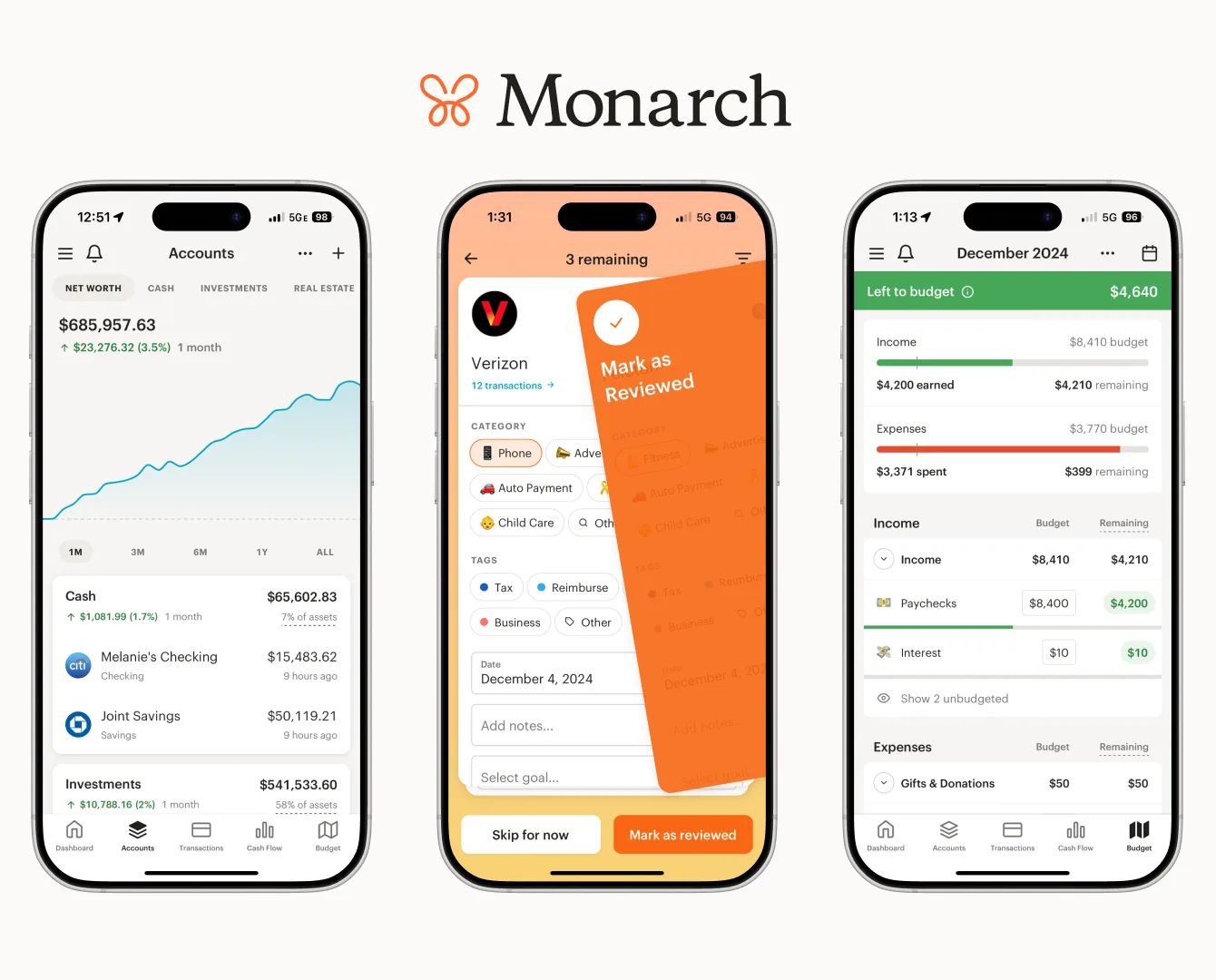
Download a budgeting app and enter one week of transactions
Monarch will change the way you organize your financial life. Connect your accounts and Monarch will do the heavy lifting to categorize your finances. From there, you can track, budget, collaborate, and set goals specific to you.
That’s it. One thing. Not because it will change your finances overnight. It won’t. But because it will change how you see yourself. And that shift, small as it feels, is where the momentum starts.
You don’t need to feel ready. You don’t need to have it all figured out. You don’t need to wait for the right moment, the right amount, or the right level of understanding.
You just need to do the one small thing in front of you right now.
The motivation is waiting for you on the other side of it. I promise.
This post is for informational purposes only and does not constitute professional financial, legal, or tax advice.
Emily
Emily is a family finance advocate. She knows what it’s like to juggle family life, endless to-do lists, and the stress of finances. She’s passionate about making money simple, approachable, and even a little fun.